School safety conversations often focus on what schools have. Do they have an emergency operations plan? A safety platform? A school resource officer? Required drills? Policies for student behavior?
Those things matter. But beneath all of them is a more fundamental question:
Who is responsible for making sure they actually work?
Accountability is one of the foundations of a safe school environment. It affects how behavior is addressed, how staff are protected, how information moves through an organization, and whether emergency plans become everyday practice or remain untouched in a binder.
Without clear accountability, even strong policies and good intentions can fall apart.
Consequences Shape the Environment
Accountability begins long before an emergency. When harmful or dangerous behavior occurs, the response sends a message—not only to the person involved, but to everyone watching.
Students notice when rules are enforced inconsistently. Staff notice when repeated concerns appear to go unresolved. Over time, those experiences shape whether people believe the systems around them will actually protect them.
This becomes especially complicated when schools are balancing the individual needs and rights of one student against the safety and well-being of the larger school community.
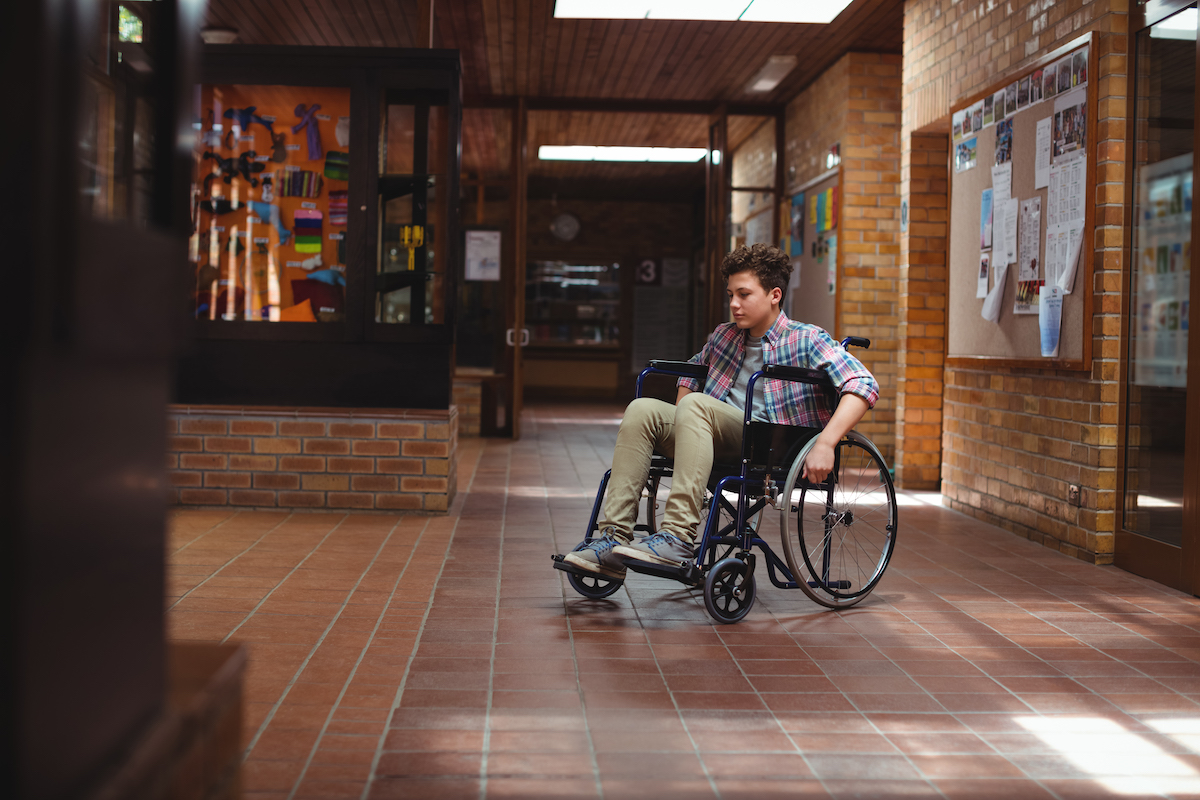
Students with disabilities are entitled to important protections and appropriate educational support. At the same time, schools cannot simply accept repeated violence toward teachers, staff, or other students as unavoidable.
Those responsibilities have to coexist. A supportive environment requires leaders to consider the totality of the circumstances: the needs of the individual student, the safety of classmates, the working conditions of staff, and the effect repeated incidents may have on the broader school climate.
Accountability is not about punishment for its own sake. It is about making clear that actions matter and that safety concerns will receive a meaningful response.
Protecting Staff Is Part of School Safety
School safety is often discussed primarily in terms of students. But educators and staff are part of that environment too.
When an employee is placed in a situation involving a known risk, information matters. Does the teacher understand the student's history? Have relevant concerns been communicated? Are appropriate supports available? Does the employee know what to do if behavior escalates?
A breakdown in that communication can leave staff trying to manage risks they did not know existed. It can also damage trust.
If employees believe leadership will not support them when something goes wrong, that perception does not remain isolated to one classroom. It influences morale, willingness to report concerns, confidence in administrators, and ultimately the culture of the school.
Safety therefore requires more than protecting people during a major crisis. It means creating an environment in which foreseeable risks are communicated, concerns are addressed, and staff believe leadership will act when support is needed.
Designated Is Not the Same as Dedicated
That same principle of accountability applies at the organizational level.
Many districts have someone designated as responsible for school safety. But being designated is not necessarily the same as being dedicated.
A safety coordinator may also be responsible for IT, facilities, administration, or another full-time function. Their name may appear on a policy because a mandate requires somebody to hold the role, even though they have limited time, training, or authority to lead the work.
That creates a predictable problem. When responsibility belongs to everyone in theory, it can easily belong to no one in practice.
Effective school safety requires someone who can say:
"This is our process."
"These are the responsibilities."
"This is how we will train."
These are the gaps we need to address. And this is how we will know whether improvements have actually been made.
A dedicated safety leader creates ownership and continuity around work that otherwise becomes fragmented across departments.
School Safety Cannot Exist in a Silo
That leadership becomes even more important because schools do not respond to serious emergencies alone.
Law enforcement responds. Fire departments respond. Emergency medical services respond. Hospitals may become involved. Emergency management agencies may coordinate resources.
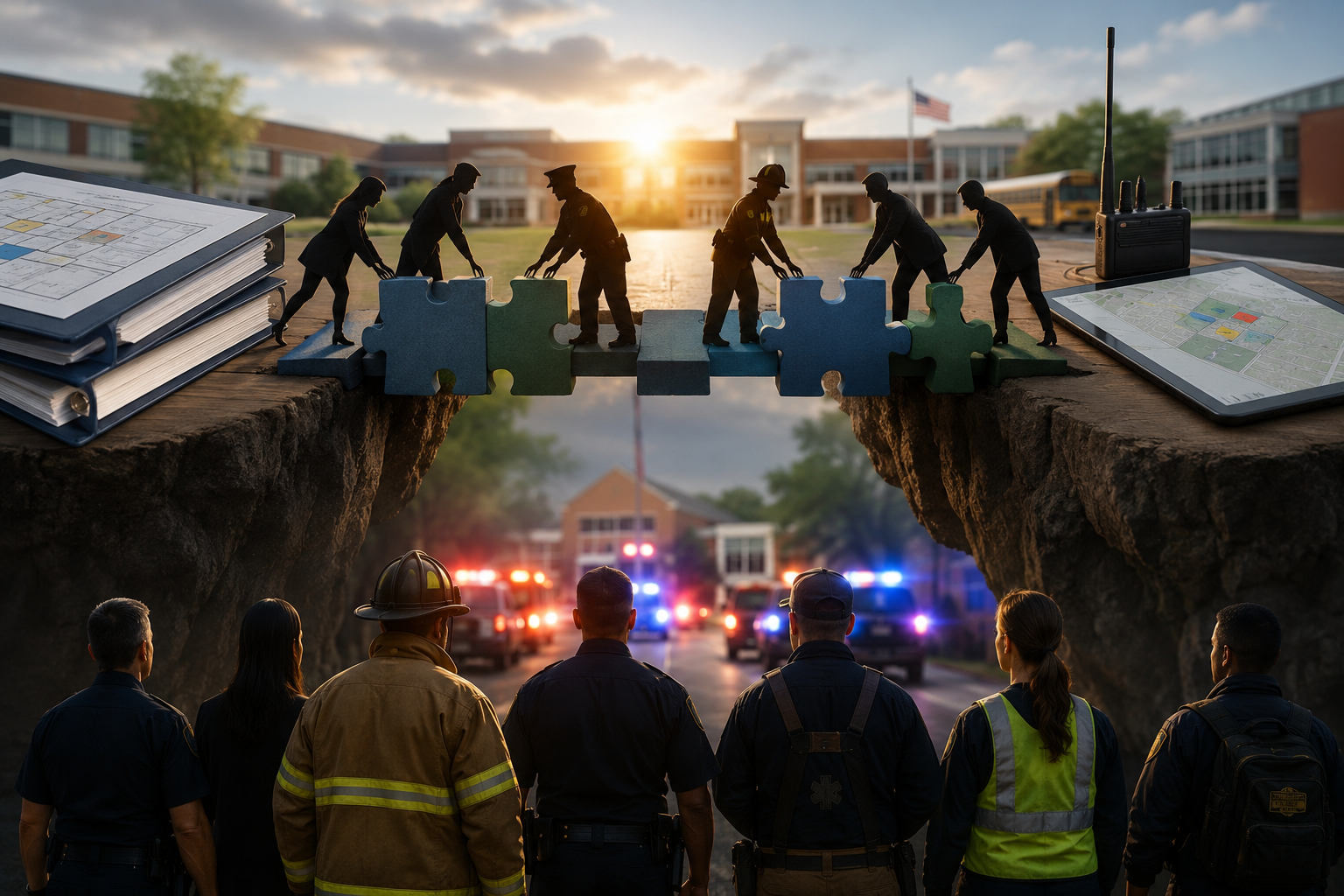
Each organization may have its own procedures, training, terminology, and emergency plans. But having several good plans does not automatically create one coordinated response.
Think of an orchestra whose musicians have practiced their individual parts but have never rehearsed together. Everyone may know their own music perfectly. But if the first time they perform together is the concert itself, the result is unlikely to be seamless.
Emergency response works the same way. Schools and community responders need to discuss how information will be shared, where resources will stage, who has responsibility at different stages of an incident, how transitions will occur, and how communication with families and the public will be handled.
Those relationships should be developed before the emergency begins. Otherwise, the incident itself becomes the first rehearsal.
Communication Has to Be Practiced
After-action reviews repeatedly reveal communication problems because communication is often treated as something that will simply happen. It will not.
Communication is a skill and a process that needs to be practiced just like any other component of emergency response.
That means more than knowing whom to call. Schools and community partners need a shared understanding of how information moves between them, what information each party needs, and what happens when circumstances change.
A dedicated safety leader can help connect those pieces. Emergency management can also play an important coordinating role because its work naturally involves bringing agencies together around hazards, planning, mitigation, response, and recovery.
The important thing is that somebody takes responsibility for making collaboration happen.
Turn the Plan Into Practice
Most schools already have emergency operations plans. The question is what happens to those plans after they are written.
An emergency plan should not exist primarily as a document to open during a crisis. It should provide the foundation for training before the crisis.
Roles should be practiced. Procedures should be tested. Partners should participate. Weaknesses should be identified through drills and exercises. Improvements should be documented and incorporated back into the plan.
The objective is familiarity, not memorizing every page, but understanding responsibilities well enough that people are not encountering the process for the first time when something has already gone wrong.
Documentation matters too. Schools will never be able to anticipate every circumstance, and no emergency response will be perfect. But leaders should be able to demonstrate that reasonable steps were taken to identify risks, prepare staff, coordinate partners, learn from exercises, and improve over time.
Someone Has to Own Safety
Policies matter. Technology matters. Training matters. Community partnerships matter. But none of them can operate effectively without people willing to take responsibility for making them work.
Accountability tells students that harmful behavior will be addressed. It tells staff that their safety matters. It tells community partners what is expected of them. And dedicated leadership ensures that plans become processes rather than paperwork.
The goal is not to assign blame whenever something goes wrong. It is to make responsibility clear before something does. Because when an emergency occurs, there is no time to start asking who was supposed to be in charge.




No Comments Yet
Let us know what you think