

Left of Bang: Building a Community Approach to School Safety

When schools discuss safety, the conversation often focuses on how to respond when something goes wrong. How quickly can staff send an alert? How will first responders access the building? What procedures should be followed when a threat is identified?
These questions are important, but they address only part of the challenge.
A strong school safety strategy looks beyond the immediate response. It focuses on recognizing potential risks, addressing concerns early, and building the relationships needed to respond effectively when an emergency occurs.
This proactive approach is closely connected to the concept of “Left of Bang,” explored by Patrick Van Horne and Jason A. Riley in their book Left of Bang: How the Marine Corps' Combat Hunter Program Can Save Your Life. The concept emphasizes recognizing indicators of potential danger and taking action before an incident occurs.
For schools, this means moving beyond emergency response alone and creating a culture where prevention, communication, and community collaboration are central to school safety.
Recognizing Risks Before They Escalate
One of the most important opportunities in school safety is identifying concerns before they develop into emergencies.
Unusual behavior, reports of potential threats, and recurring safety concerns may each provide an opportunity to investigate and determine whether further action is needed. Not every concern indicates an imminent threat, but having a consistent process for evaluating information helps schools avoid overlooking important warning signs.
Consider a situation in which a student leaves a school through an unauthorized exit. The immediate priority is to ensure the student's safety and prevent an unsafe return to the building. But school personnel should also communicate the incident to the appropriate safety team and consider whether additional concerns or patterns of behavior warrant attention.
The same principle applies when a school receives a report of a potential weapon on campus or a concern involving student behavior. Staff need to know how to report the information, who is responsible for evaluating it, and what steps should follow.
Prevention does not mean predicting every possible incident. It means creating processes that help schools recognize concerns, investigate them appropriately, and take action before a situation escalates.
Communication Is a Critical Part of Prevention
Communication plays a significant role in both preventing incidents and maintaining trust within a school community.
When parents hear about a potential threat but receive little information from school leadership, uncertainty can quickly spread. Even when administrators are actively investigating a situation, a lack of communication may leave families wondering what happened and whether their children are safe.
Schools must balance the need to communicate with the responsibility to verify information and protect sensitive details. A report or tip may provide a reason to investigate, but it does not necessarily confirm that a threat is real. At the same time, uncertainty should not become a reason to leave families without meaningful updates.
An effective communication plan establishes how schools will share what is known, explain what is still being investigated, describe precautions being taken when appropriate, and tell families what to expect next.
The same approach is important when addressing bullying, student behavior, or concerns raised by parents. When families feel their concerns are dismissed or important information is withheld, trust can deteriorate. When schools communicate consistently and take concerns seriously, they create stronger relationships with the people who play an important role in student safety.
Communication should not be treated as a secondary task that begins after an incident. It should be an established part of a school's broader safety strategy.
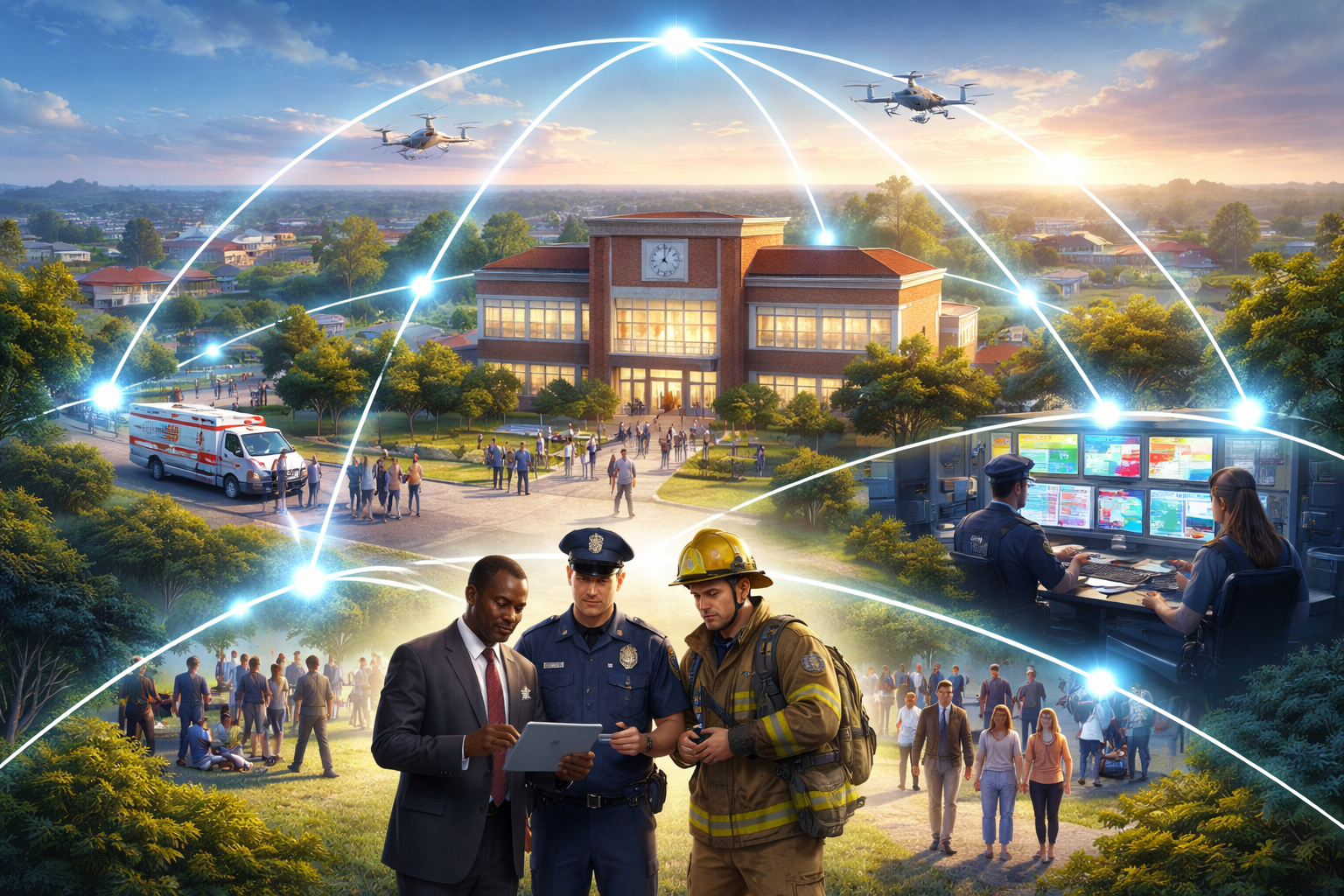
School Safety Requires a Connected Community
Schools do not operate in isolation, and their safety plans should not either.
An emergency may require coordination among school administrators, teachers, law enforcement, fire departments, emergency medical services, emergency management agencies, hospitals, and other community organizations. Each group brings different capabilities and responsibilities to the response.
However, having individual plans does not automatically mean those plans will work together.
For example, a school may have an established evacuation procedure but still need to coordinate with emergency responders about building access, traffic routes, staging areas, and the movement of students and staff. Hospitals may need to understand their potential role in receiving patients, while public information personnel may need to coordinate messaging across multiple agencies.
These are not details that should be worked out for the first time during an emergency.
Schools should establish relationships with community partners in advance, clarify responsibilities, identify potential gaps, and agree on how critical information will be shared. Regular collaboration helps each organization understand not only its own role, but also how its decisions affect the larger response.
A connected community safety network creates a stronger foundation for prevention and preparedness. It also helps ensure that schools and their partners are working toward the same objectives rather than operating in separate silos.
Preparedness Must Be Practiced, Not Just Documented
Written plans are necessary, but they are only effective when the people responsible for carrying them out understand their roles.
Tabletop exercises, drills, and full-scale exercises give schools and community partners opportunities to test their procedures in realistic scenarios. These exercises can uncover communication breakdowns, unclear responsibilities, and assumptions that may not hold up under pressure.
They also allow organizations to learn from one another. A school administrator may identify a challenge that emergency responders have not considered, while a first responder may recognize a logistical problem that is not obvious from the school's perspective.
The goal should be more than completing an exercise or meeting a requirement. Schools and their partners should use the results to identify weaknesses, make improvements, and test whether those improvements work.
This process should continue as circumstances change. Staff members leave, buildings are modified, community risks evolve, and new challenges emerge. Safety plans need to reflect those changes.
Preparedness is not a one-time project. It is an ongoing cycle of planning, practicing, evaluating, and improving.
Technology Supports Safety, but It Cannot Replace Preparation
Emergency communication systems, panic buttons, and other safety technologies are important components of a school's response capabilities. They can help staff communicate urgent information, notify the appropriate people, and provide situational awareness when seconds matter.
But technology is only one part of the equation.
An alert can notify the right people that an emergency is happening, but those individuals still need to understand their responsibilities, have access to relevant information, and know how to coordinate with other responders.
Technology is most effective when it supports established procedures and relationships. Without preparation, even a well-designed system can leave people uncertain about what to do next.
Schools should evaluate safety technology as part of a comprehensive strategy that includes prevention, communication, training, and collaboration. The objective is not simply to respond faster when something goes wrong. It is to create an environment in which risks can be recognized earlier and people are prepared to act when necessary.
Building a Culture of Continuous Improvement
A proactive approach to school safety requires a willingness to evaluate decisions, learn from experience, and make changes before the next incident occurs.
When an emergency or safety concern reveals a weakness, schools should look beyond the immediate problem and examine the processes that contributed to it. Was information reported to the right people? Were responsibilities clear? Did communication happen when it was needed? Were community partners prepared to coordinate their response?
These questions help schools identify opportunities to improve rather than simply return to existing procedures.
Requirements and mandates can establish important safety standards, but compliance alone does not guarantee that a school's overall approach is effective. Schools must also consider their specific risks, the needs of their communities, and how their plans function in practice.
By regularly reviewing procedures, incorporating lessons from exercises and real incidents, and working with community partners, schools can build a safety strategy that evolves alongside their needs.
The Work of School Safety Begins Before a Crisis
Effective school safety is not defined by a single product, policy, or emergency plan. It is built through the combined efforts of people who recognize potential risks, communicate openly, and understand how to work together.
The concept of “Left of Bang” reinforces the importance of looking for opportunities to act before an incident occurs. For schools, putting that mindset into practice means taking concerns seriously, maintaining communication with families, coordinating with community partners, and continually evaluating whether existing procedures are working.
When an emergency happens, there may be little time to establish trust or figure out who is responsible for what. Those relationships and decisions need to be developed beforehand.
The strongest school safety strategies do more than prepare schools to respond to emergencies. They help schools and their communities work together to prevent incidents, reduce risk, and protect the people in their care.
You May Also Like
These Related Stories
From Panic Buttons to Platforms: How School Safety Actually Evolved

Building Partnerships for School Safety

No Comments Yet
Let us know what you think