A student makes a threat during a FaceTime call, someone reports it, and law enforcement becomes involved. On the surface, this appears to be a success. The system worked.
But school safety is not defined by the report itself. It is defined by what happens next. And that is where many systems begin to show their weaknesses.
The Danger of “It Was Just a Joke”
A common response to threats is to dismiss them as jokes or statements made without intent. While this may feel like a reasonable way to move forward, it introduces unnecessary risk. Students understand the impact of their words, and any threat should be treated as a signal that requires evaluation.
When threats are minimized without proper assessment and documentation, they often become what is later described as a “missed opportunity.” In reality, these moments were not missed, they were simply not acted upon in a meaningful way.
Most Threats Don’t Start at School
Many threats originate outside of school, through social media, text messages, or private conversations. By the time the information reaches school officials, the situation may already be evolving.
This creates a critical gap: how does information move from the community to the school quickly enough to influence decisions? If that connection is weak, the school is already reacting too late.
The Problem with “Credible Threat” Thinking
Schools often rely on whether a threat is considered “credible” before taking action. However, this standard can be limiting. A threat does not need a detailed plan or immediate capability to represent risk; it only needs to indicate movement toward harmful behavior.
A more effective approach focuses on identifying patterns and understanding whether an individual may be progressing along a pathway toward violence, rather than waiting for a situation to meet a strict definition of credibility.
When One Threat Becomes Many
The situation becomes more complex when multiple threats are received across different campuses. Without coordination, schools respond independently, law enforcement receives fragmented information, and resources are stretched thin.
In these moments, the challenge is not just response, it is determining where attention and resources are needed most while operating under uncertainty.
This Is Also a Resource Challenge
Every alert is designed to trigger a response, but most agencies do not have the capacity to fully respond to multiple simultaneous incidents across different locations. This forces rapid decisions about resource allocation, often with incomplete information.
Without clear communication, those decisions can become reactive rather than strategic.
Why Communication Matters More Than Speed
Speed is important, but clarity is what enables effective response. There is a significant difference between receiving multiple disconnected reports and having a unified understanding of what is happening.
When responders can see patterns and context, they are better equipped to coordinate and act efficiently. Without that visibility, even fast responses can be misdirected.
Acting Before Confirmation
Most systems are designed to respond after something has been confirmed. However, there is growing value in acting earlier. If credible information suggests a potential threat, even without full verification, notifying schools allows them to take precautionary measures.
While this may disrupt normal operations, it provides valuable time to assess and respond before a situation escalates.
The Missing Piece: Trust
All of this depends on trust between schools, law enforcement, and emergency responders. Without strong relationships and clear expectations, communication slows down and coordination becomes more difficult.
Operating in isolation while still relying on external response during emergencies creates unnecessary risk and confusion.
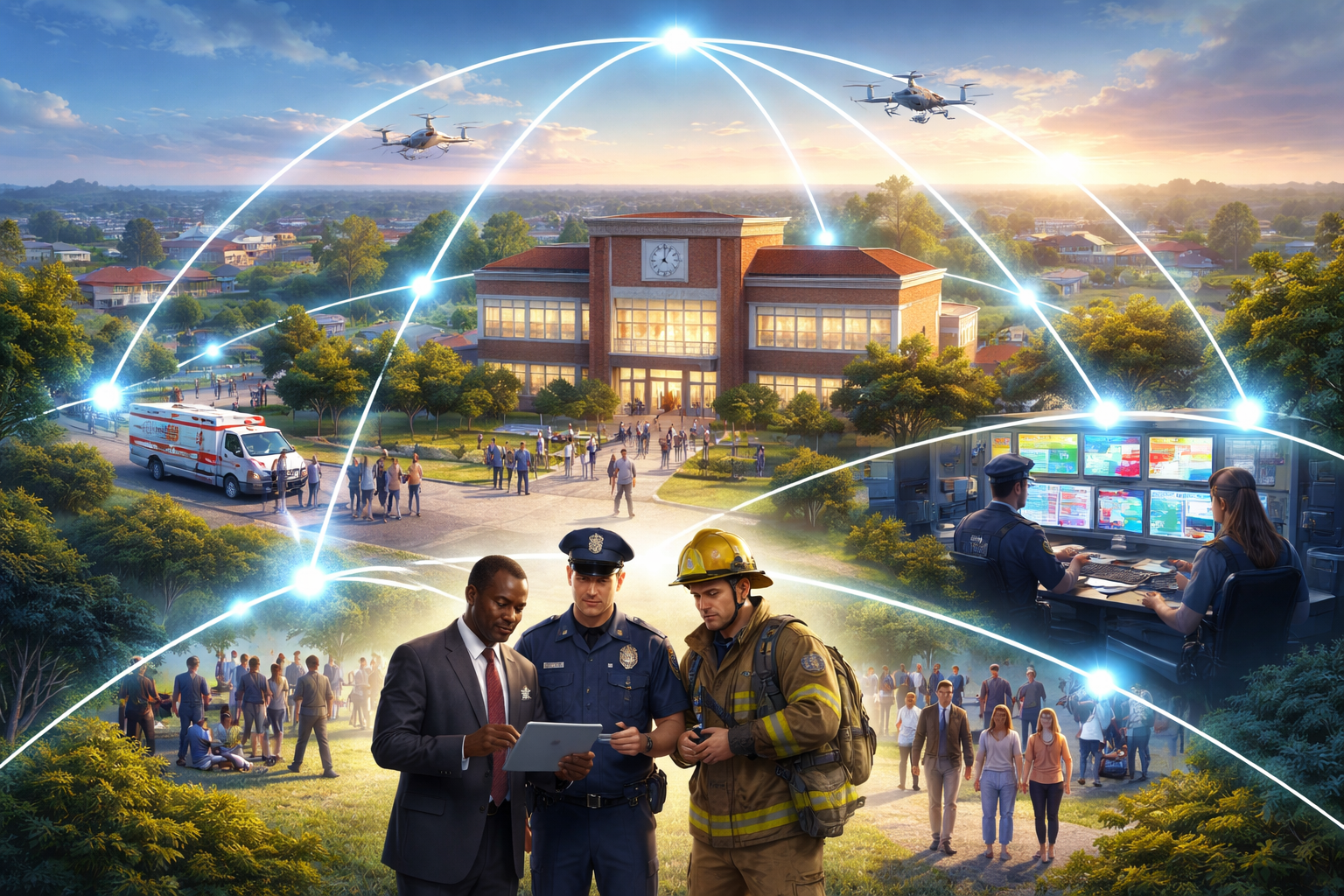
School safety is not confined to a building. It is a system that includes schools, law enforcement, emergency responders, and the broader community.
When any part of that system operates independently, risk increases. Effective safety requires recognizing that school safety and community safety are interconnected, and that the strength of one depends on the strength of the other.





No Comments Yet
Let us know what you think